


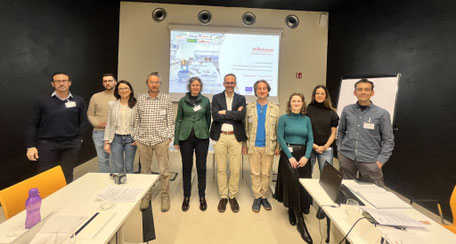
A project with ETH Zurich university

Projects with hempcrete: Bees, blocks, and more
Our efforts for a better world, one hemp brick at a time
Future-oriented thinking and innovation are not only reflected in our building materials.
We are happy to share our expertise and long-standing experience with hemp as a raw material in general, and with our hemp-lime blocks in particular – not only through on-site consulting for your construction projects.Over the years, Schönthaler Bausteinwerk and Schönthaler Baustoffe have supported and realized a wide range of projects: from affordable, modular construction in developing countries, to bee-friendly habitats for biodiversity conservation, and large-scale research collaborations with institutions and partner companies in Germany and abroad.
We present a selection of these projects here. Feel free to contact us if you are interested in a similar collaboration
Contribution to the EU project InRenova: Interior wall insulation with hempcrete - sustainable, functional, future-proof.
As part of the EU project InRenova, coordinated by Eurac Research, we are working together with research institutions and companies to develop and test sustainable solutions for energy-efficient renovation of existing buildings. The focus is particularly on interior wall insulation, which is often considered problematic in the renovation sector – whether from a structural, economic, or ecological point of view.
InRenova aims to help dispel common misconceptions:
- That renovations are more expensive than demolition and new construction
- That interior wall insulation always leads to moisture problems
- And that ecological materials are not efficient enough in this context
On the contrary, the project's findings to date show that renovation is cheaper and more sustainable in the long term if planning, execution, and material selection are well coordinated.
Our contribution to the project consists of providing our many years of experience and references and testing the insulation system made of hemp stone, which is characterized by the following properties:
- Diffusion-open and without foils: Moisture-regulating and permanently functional
- Cement-free and CO₂-negative: Contributes to the decarbonization of the construction sector
- Suitable for solid, breathable interior plasters (e.g., made of lime or clay), which have an additional positive effect on the indoor climate
- Recyclable and free of problematic building materials
Accompanying the project is a planning guide for builders and specialist planners, which is intended to provide a sound basis for decision-making in renovation projects. The aim is to provide practical and tried-and-tested solutions to make it easier to implement resource-saving renovations.

TwistBlocks for Afrika
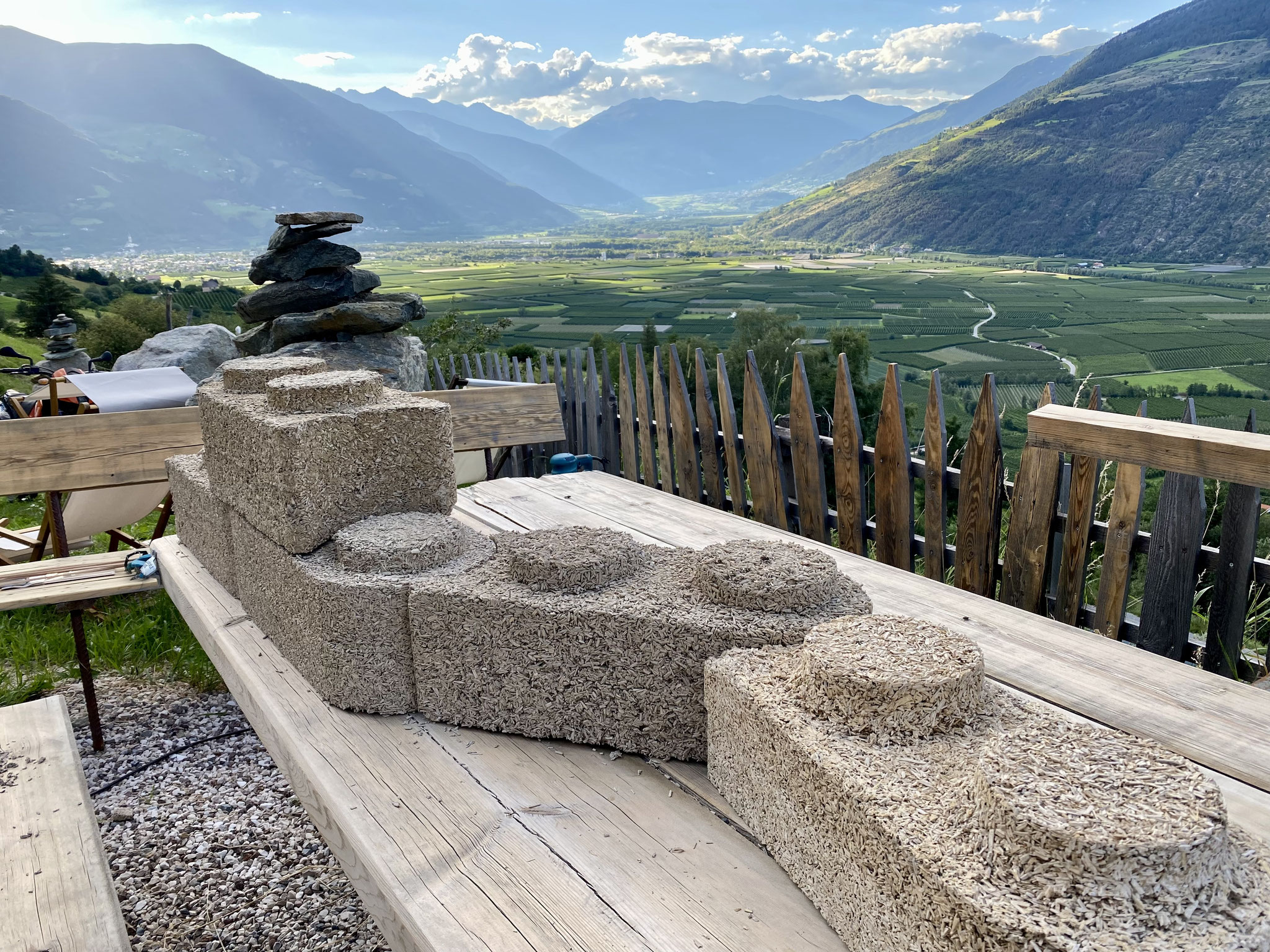
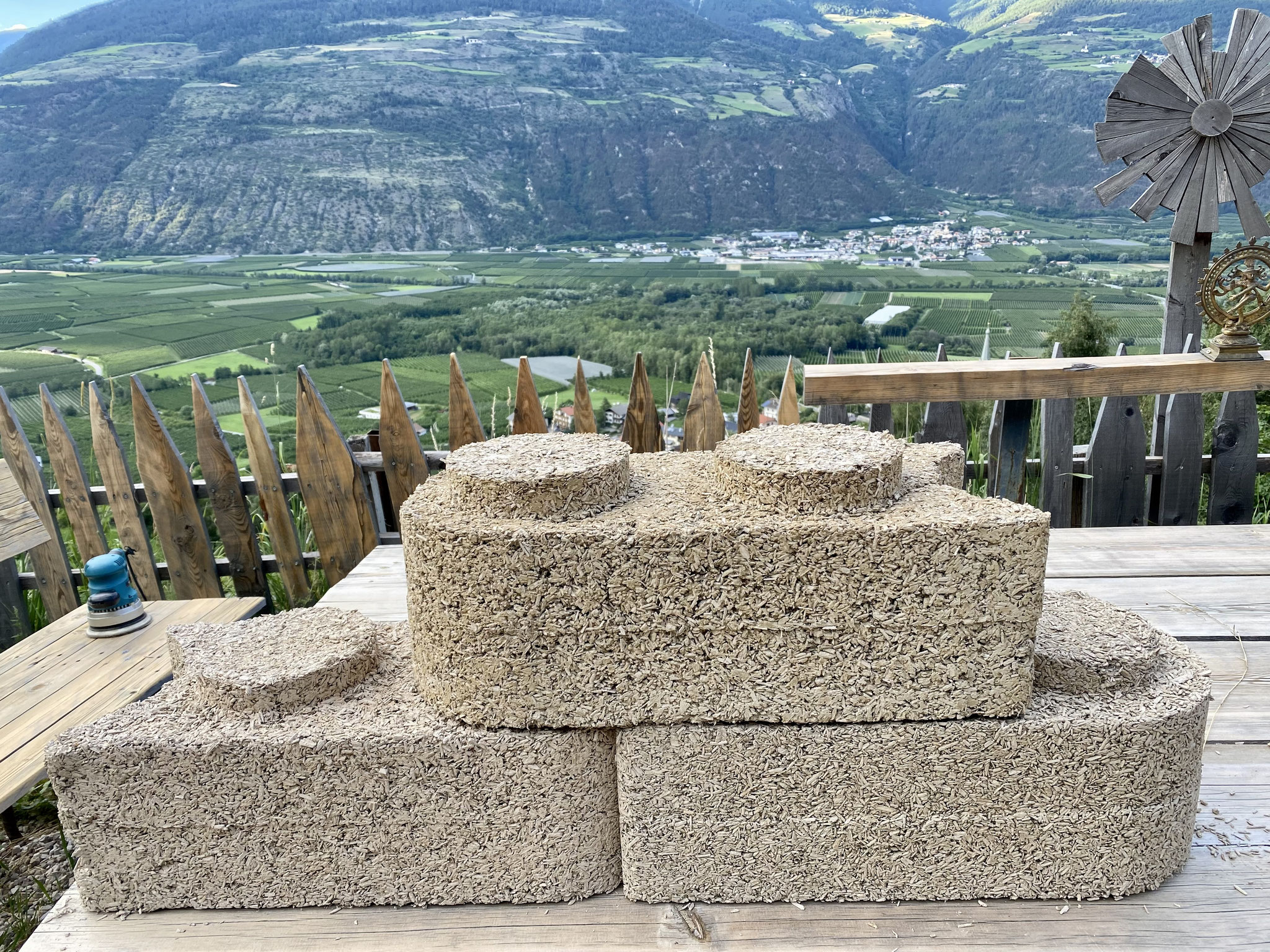
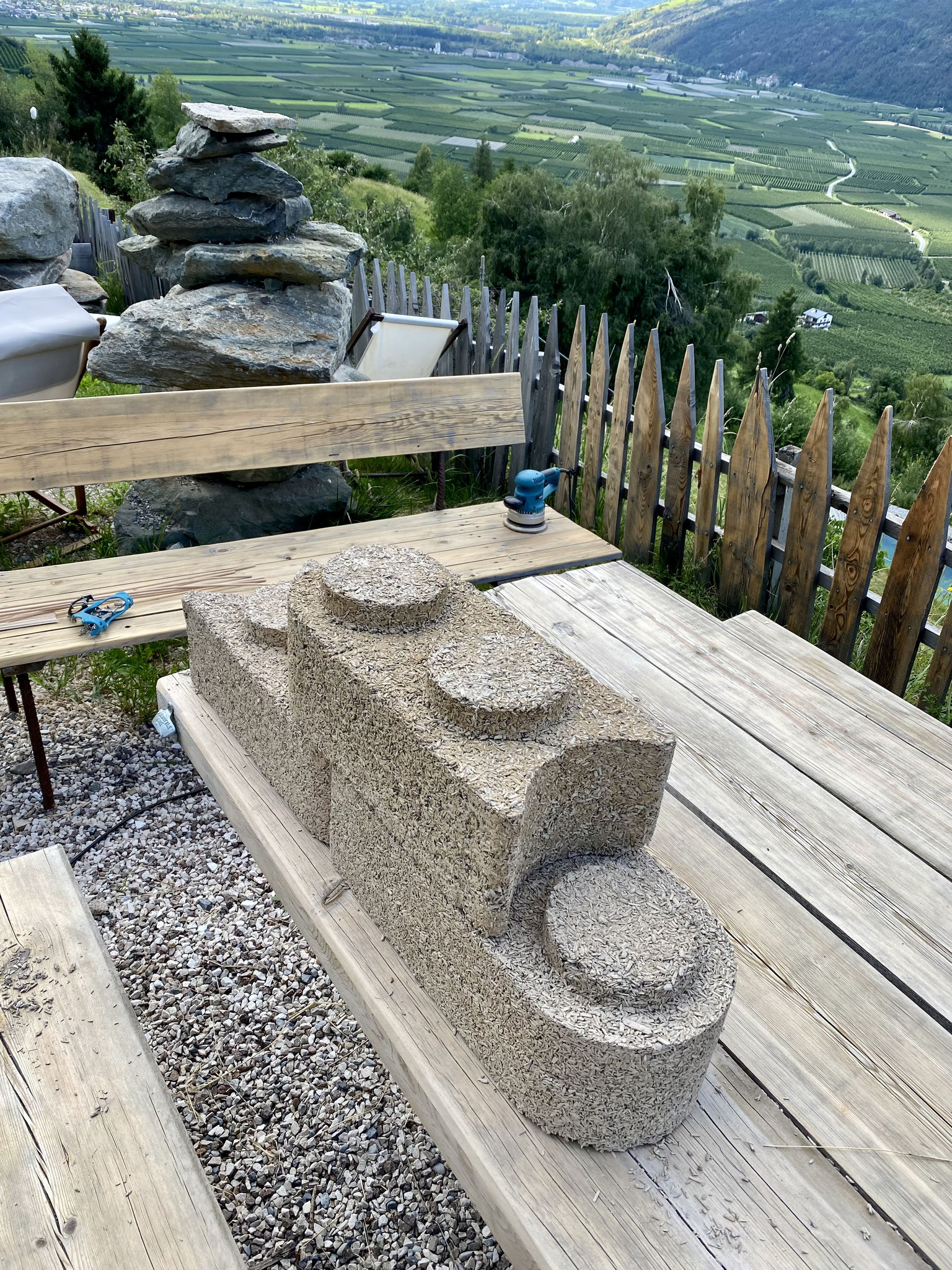
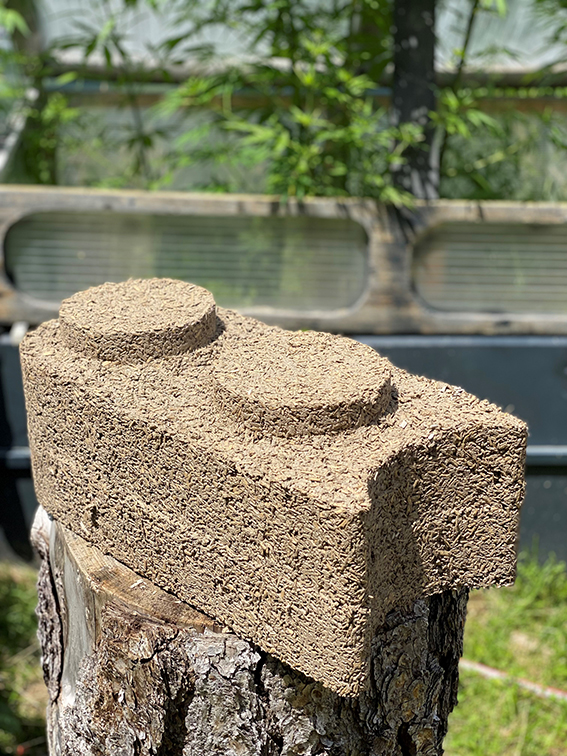
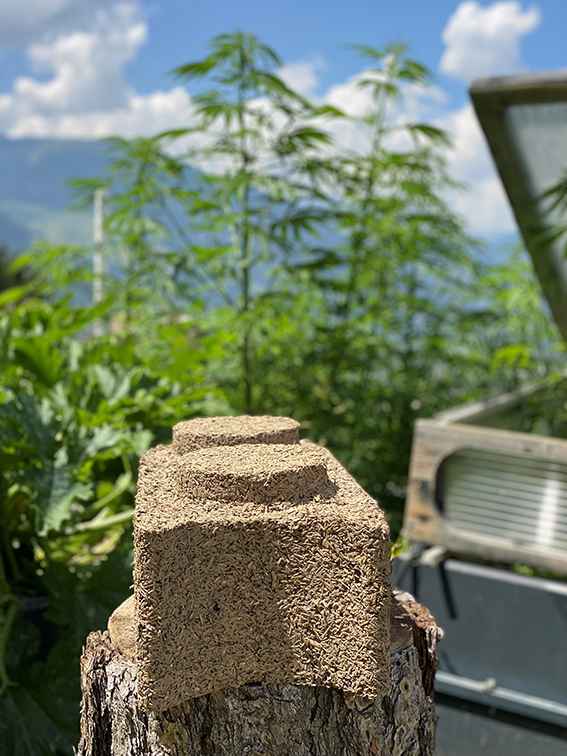
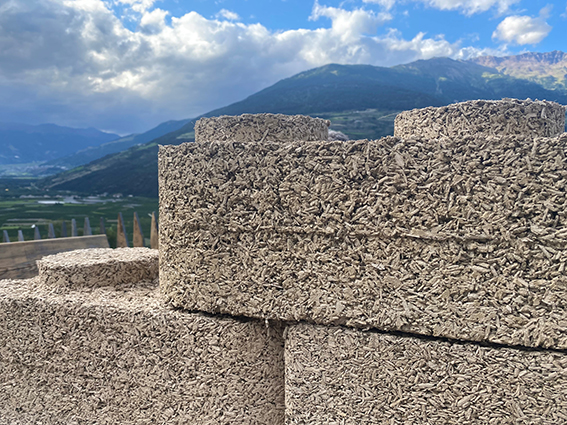
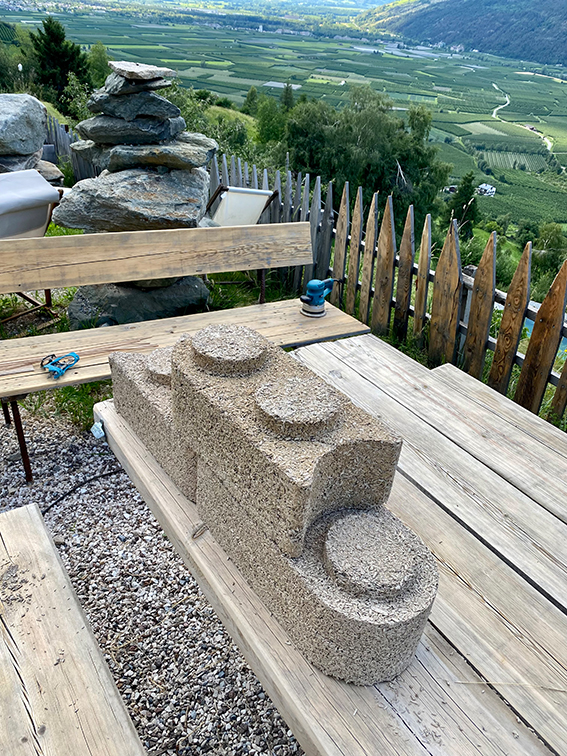
Mechanized, automated production in industrialized countries, which is necessary to remain price competitive, is the opposite of what is seen in most developing countries. Here, there are few, expensive means of production, but plenty of motivated people eager to work. In addition, the issue of housing and shelter as a basic need is much greater than in industrialized countries. This is where TwistBlocks comes in, a project by Oliver von Malm (Start Somewhere). It is an adapted version of our hemp block that can be produced and used locally in Kenya and is even easier to handle thanks to its modular shape, reminiscent of famous building blocks. Hemp shives are also preferred here, as they are widely available as a waste product in many African countries, but depending on local conditions, rice husks or other agricultural residues are also suitable.
In other countries, too, we are working with local and international NGOs to set up as many local production facilities and houses as possible in order to give the population independence, knowledge, and a dignified place to develop. Small teams can achieve a great deal with relatively little effort.
Bee protection and biodiversity

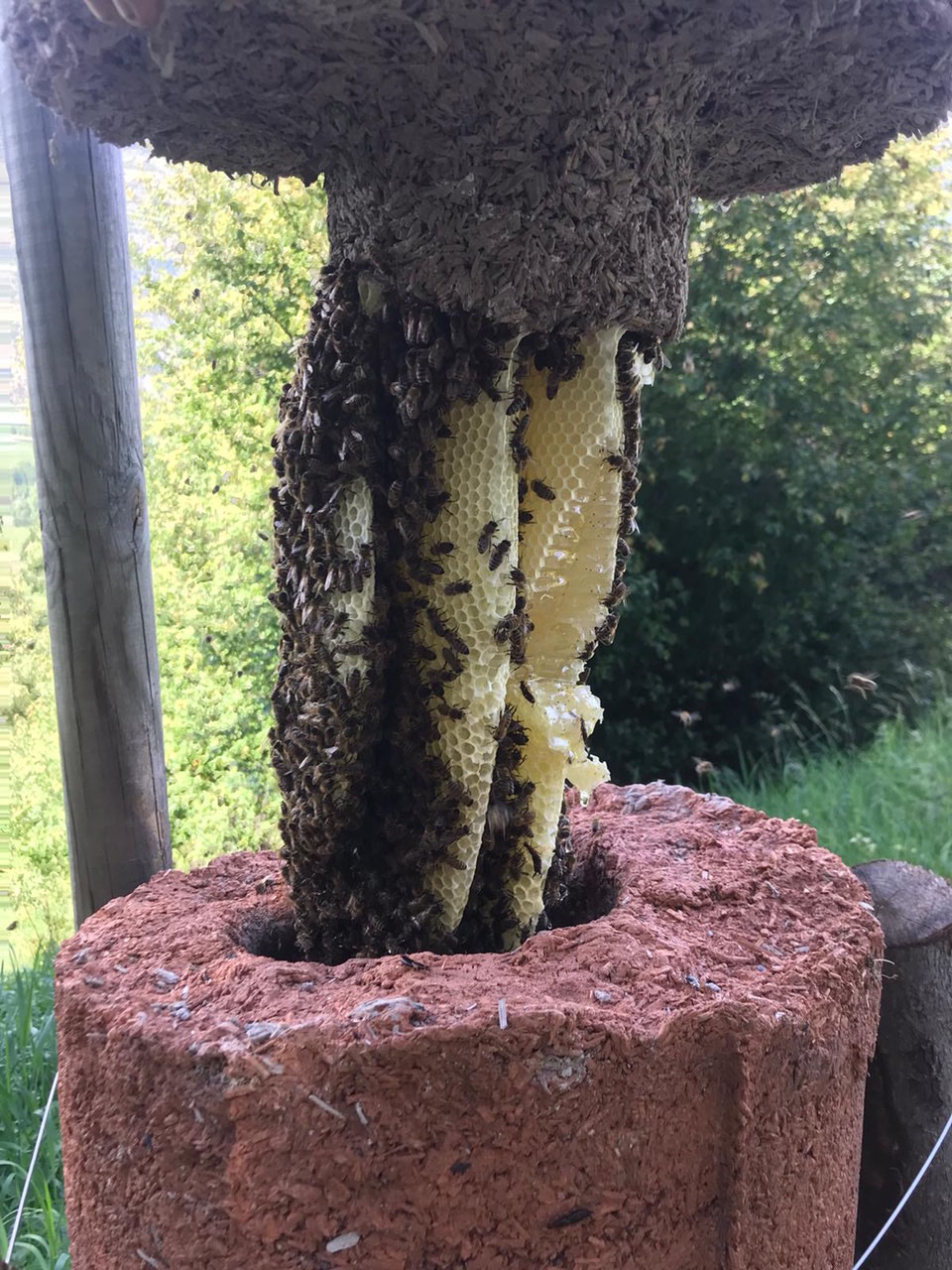


The coexistence of humans and bees is often praised as the perfect symbiosis between humans and animals. The honeybee as a species has existed for around 30 million years, but intensive beekeeping optimized for ever-increasing honey yields has only been around for around 200 years, with the invention of movable wooden frames that allow the bee colony to be broken down into its individual parts without destroying the brood structure. A prominent issue in recent years has been and continues to be the Varroa mite, which some consider to be the main factor in the decline of the honeybee population. Beekeepers are trying everything they can to combat the pest, mostly with costly formic acid treatments.
However, the latest research shows that bees are also capable of dealing with Varroa infestation themselves if they are given the opportunity and peace to do so. Over the many millions of years of their existence, honeybees have repeatedly been able to adapt to changing environmental conditions, but honey extraction, unfavorable husbandry conditions (more on this below), and constant treatments against pest infestation cause enough stress in the hive to force them to focus on pure survival.
That is why our declared goal in the Beefriendly Homes project at ETH Zurich is to create beehives that allow honeybees to independently and naturally evolve and adapt to environmental conditions. With intensive honey beekeeping comparable to large dairy barns, this change is not possible at the moment. Honeybees need species-appropriate housing. The basic requirements for this are:
- Internal volume of approximately 30 liters (corresponds to the size of natural tree hollows in the wild): The small volume encourages swarming, which promotes natural reproduction and therefore genetic diversity. Conventional beehives have a volume of up to 140 liters, from which the queen cells with the young queens are removed; the colony does not swarm and grows steadily to produce more and more honey.
- Well insulated and moisture-regulating: Most honey beehives are made of poorly insulating wood or polystyrene panels, which do not allow moisture exchange.
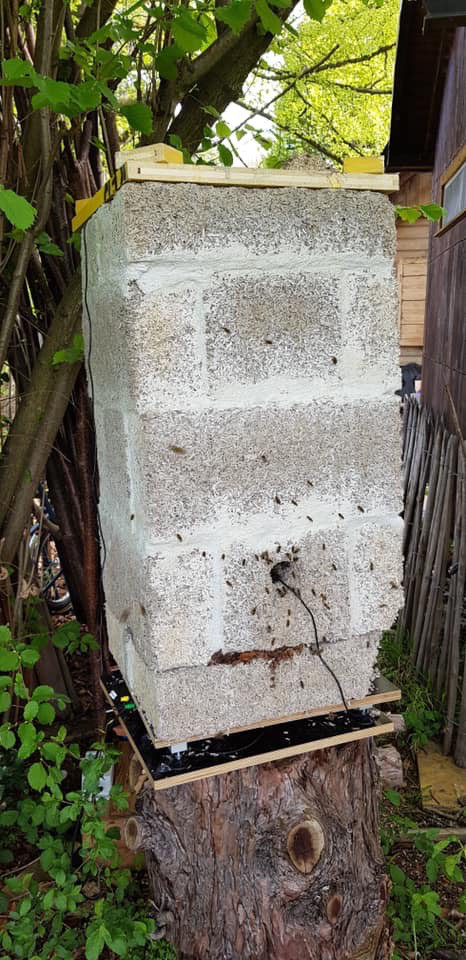
- Location at a height of approx. 3 meters (ideally in a tree): This is good for protecting against ground moisture, disturbances from other animals, and attacks on humans with honey stings. Beekeepers usually place their hives close to the ground for easier management, often in exposed locations such as flat roofs. This offers the bees little protection and causes extreme temperature differences, which the bees have to compensate for, causing them unnecessary stress (the hive needs a constant temperature of 35 degrees Celsius for optimal function). A material that also has a heat-regulating effect is advantageous here.
- Natural environment: Like nesting boxes for wild birds, the hives should offer space and opportunities for the bees to move in themselves and settle in according to their needs, without any predetermined structures inside. This also has the advantage that interested bee supporters do not need to do anything or have any knowledge of bees, as they organize and feed themselves.
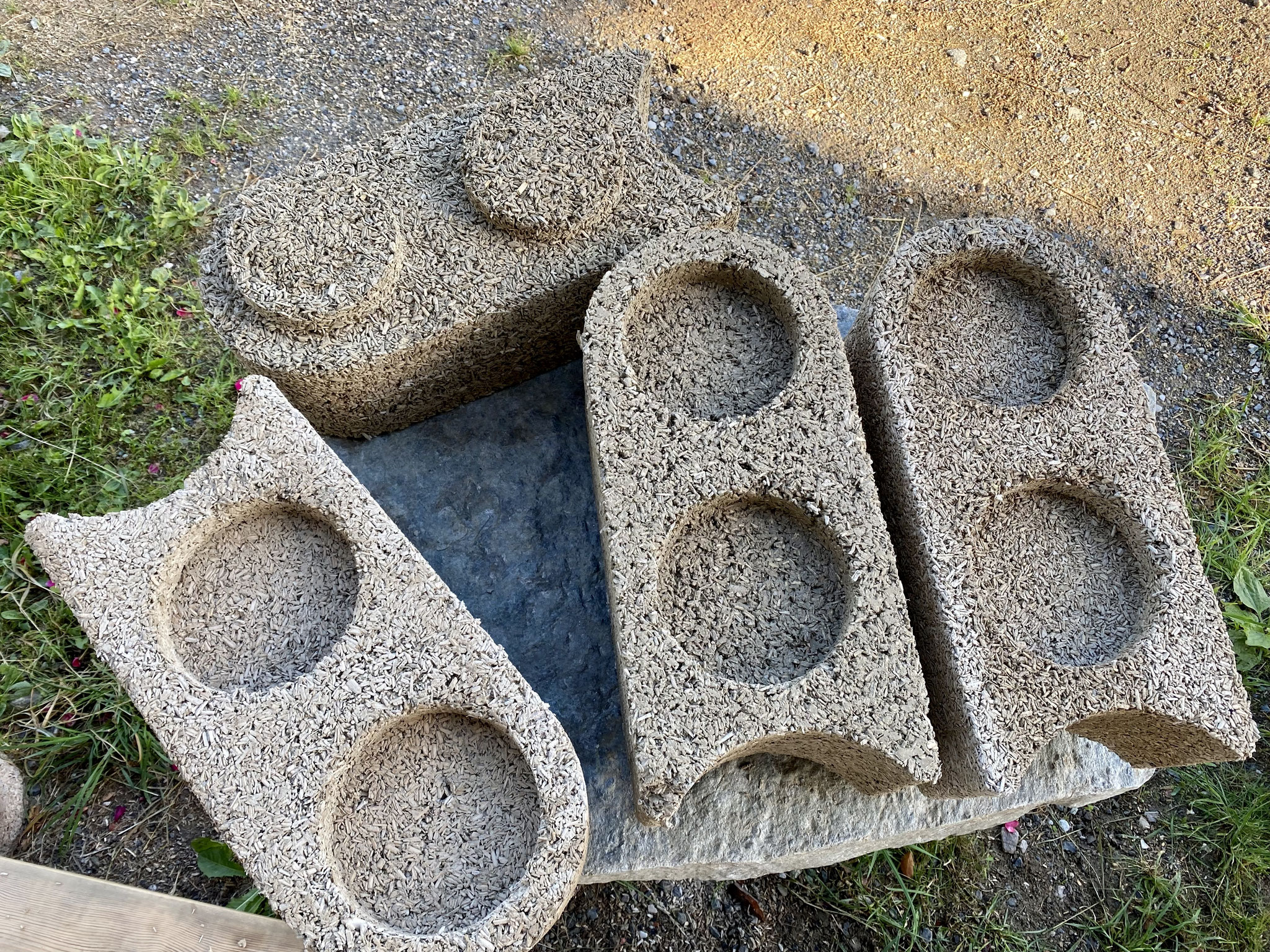
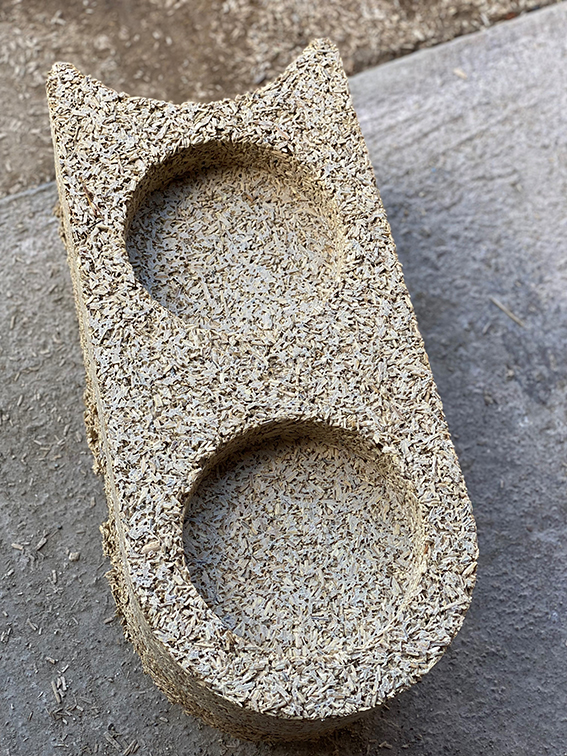
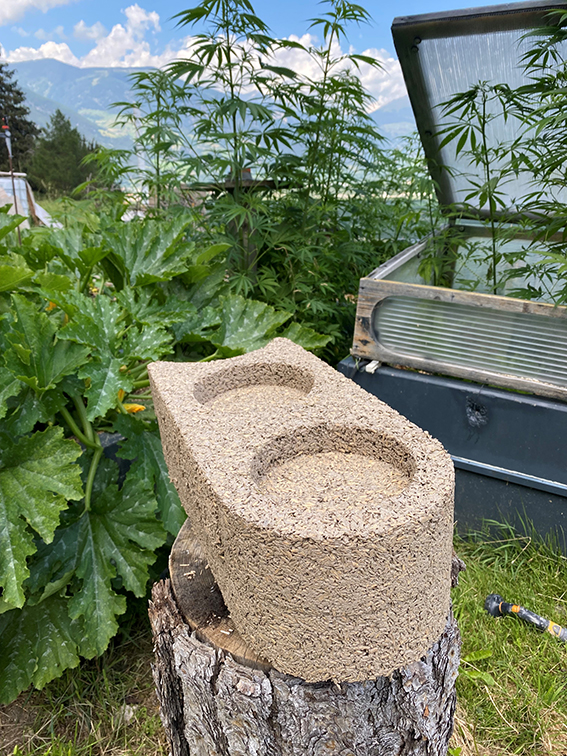
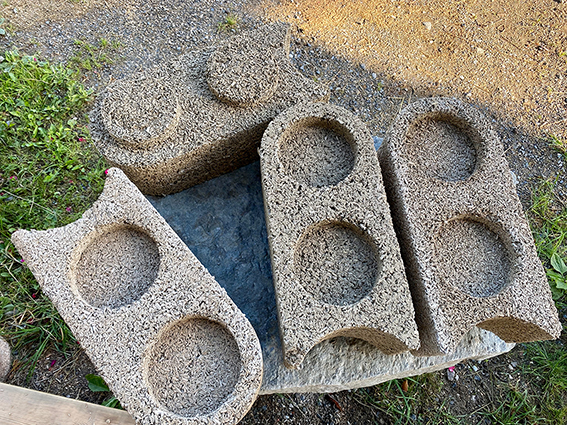
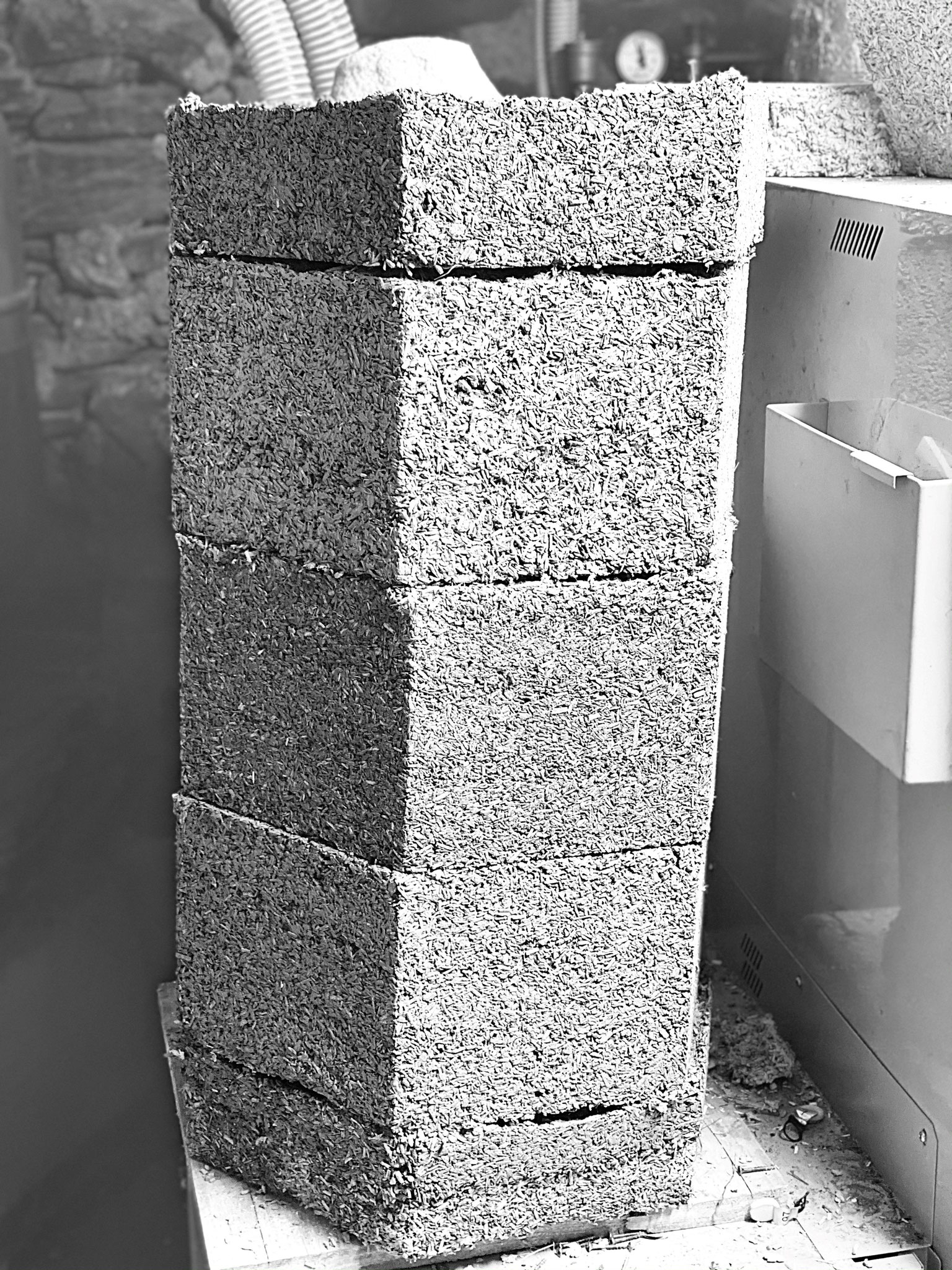
At the moment, ETH Zurich is therefore attempting to develop natural bee habitats that meet the above requirements as closely as possible. Several concepts have been developed, scientifically measured for their temperature and humidity behavior, and compared with commercially available beehives and natural tree hollows. The tests include thick-walled round wooden hives, straw hives interwoven with mycelium, and round dwellings made of hemp lime bricks (developed by Daniel Boschung, ETH Zurich, and Werner Schönthaler). Our Schönthaler hemp-lime brick perfectly meets the above requirements, and we are proud to contribute great added value to the species protection of honey bees!
By the way: Apart from this project, we also have a long-standing research partnership with ETH Zurich
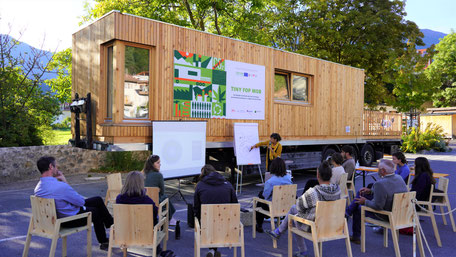
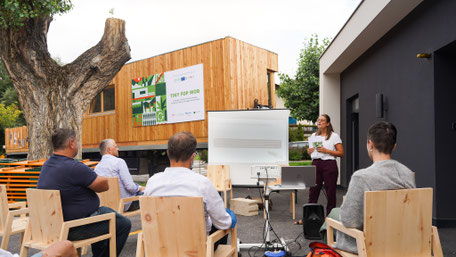
Tiny FOP MOB : Real-world laboratory on tour
Research for the construction sector of the future
The Tiny FOP MOB research project (the small FOrschungs- und Praxis-MOBil) is a construction project, educational initiative, and research project all rolled into one. It encourages people to think about sustainability in the construction industry and beyond, and provides concrete, illustrative examples of how this can be achieved. The project, which was funded by the European Regional Development Fund (ERDF) 2014-2020, involved the planning, construction, and actual use of a CO2-negative real-world laboratory on wheels—a new form of cooperation between research and society. It clearly shows how the construction sector can contribute to the resource-efficient use of our environment through the use of a new combination of wood, hemp, and coal. As part of the research, prefabricated walls filled with hemp lime and various other variants were tested and built. Prefabricated walls filled with hemp stones due to existing certificates and approvals, and prefabricated walls filled with hemp lime from our production plant for precast concrete ceilings.
Connections between the center and the periphery, between science and craftsmanship, between practice and theory have been and continue to be created. The real-world laboratory stopped in five pilot communities in the Vinschgau Valley in South Tyrol to find sustainable solutions together. In addition to tours of the mobile laboratory, workshops, open discussion rounds, keynote speeches by experts, and other activities were also organized. The project's great popularity among the local population, but also among interested companies, clearly shows that sustainable construction and socio-ecological responsibility remain burning issues that must be addressed and concrete solutions found.
360° Hemp – Our hemp stone as part of the circular economy
Our project partners in the seamless life cycle of hemp
Hemp-lime wall elements for commercial construction projects
Pioneering work with prefabricated hemp-lime walls
In October 2018, we had the great honour of welcoming Rainer Nowotny to our premises.
His visit was the catalyst for a very special project: in close cooperation with the company Uckermark, we cast hemp-lime prefabricated walls for him. The basic idea: the rapid, serial construction of industrial buildings and multi-storey buildings
The idea and development came from Uckermark – we tested and produced parts for it.
We poured the hemp-lime mixture into wooden frames and used our production line for prefabricated ceilings. This optimised production efficiency to the maximum.
This combination of traditional timber construction, forward-looking hemp-lime and industrial precision was a milestone and laid the foundation for today's prefabricated hemp-lime elements.
Further information:
https://hanffaser.de/hanf-fabrik-um/hanf-ziele